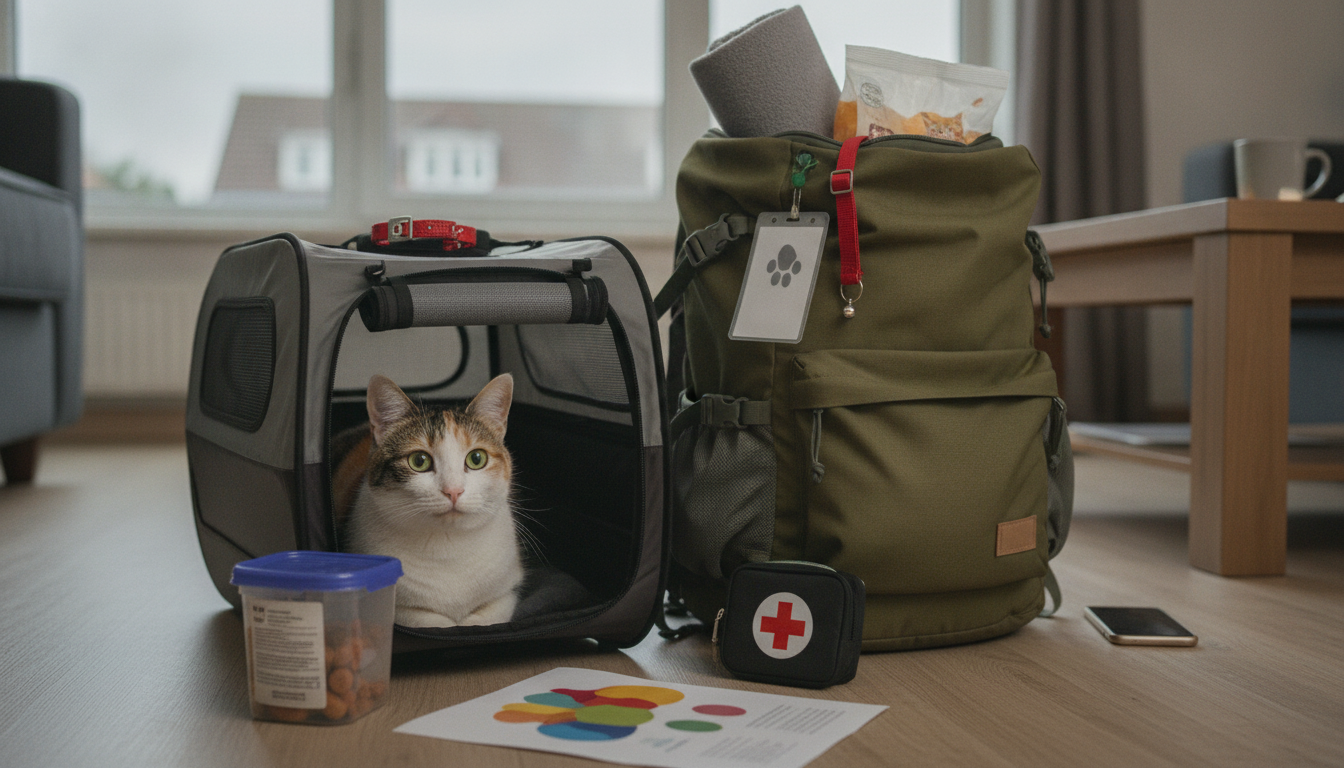
Emergencies rarely come with warning, and pets depend on clear decisions made fast. A practical pet emergency plan helps keep animals safe during evacuations, storms, power outages, wildfires, medical emergencies, and sudden travel disruptions. The goal is simple: know where to go, what to grab, who can help, and how to keep pets identifiable and calm—before stress and time pressure hit.
A dependable plan addresses two core scenarios: shelter-in-place (staying home safely) and evacuating (leaving quickly with pets). In both cases, the priorities are the same: solid identification, safe containment, essential supplies, and verified destinations that will actually accept your pet.
Assign roles in advance so the household can move without debate: one person grabs carriers/leashes, one person grabs the pet go-bag, and one person handles medications and documents. Build a “grab-and-go” routine that works even if the primary caregiver is away—because emergencies rarely happen on a convenient schedule.
Finally, treat the plan like a living document. Update it when medications change, microchip registration is revised, you move, or pets age into new needs. Seasonal hazards matter too: heat waves, smoke, floods, ice, and storms all change what “safe” looks like.
Identification is the fastest way to turn a scary separation into a reunion. Start with a collar and readable ID tag that includes at least two phone numbers. If you travel or have a local friend who can help, adding a local contact number can be a lifesaver during evacuations.
Microchips are only helpful when the registration is current. Confirm your pet’s chip number, verify the account is active, and keep the details with your emergency documents. Keep recent photos, too: one full-body shot and one close-up showing markings. A photo of your pet with the caregiver can help with ownership verification when records are hard to access.
Round out your documents with vaccination history, spay/neuter records, prescriptions, and notes about chronic conditions. A simple pet profile page also helps a backup caregiver act confidently: feeding schedule, allergies, behavior triggers, bite history (if any), and the best calming methods for your pet.
Pick a primary evacuation destination outside the risk area: a pet-friendly hotel, trusted friend/family home, or a boarding facility. Then add at least two backups in different directions. Fires, road closures, and weather systems can make your “obvious” route impossible.
Confirm policies in advance (and re-check periodically): size limits, breed restrictions, vaccination requirements, and whether a crate is required in rooms or common spaces. Map one main route and two alternates, save offline maps, and keep a paper copy in the car.
If sheltering in place, identify the safest room and pre-position supplies there. Plan for temperature control during outages—especially for brachycephalic pets, seniors, and animals with heart or respiratory issues. Guidance from Ready.gov’s Pets and Animals and the American Veterinary Medical Association (AVMA) can help you fine-tune your preparedness.
| Category | What to pack | Notes / Quantity |
|---|---|---|
| Identification | ID tags, microchip number, recent photos | Printed + saved on phone/cloud |
| Food & Water | Food, bottled water, collapsible bowls | 3–7 days; rotate every 2–3 months |
| Medical | Meds, prescriptions, vet contacts, first-aid basics | Include dosing schedule and refills |
| Containment | Carrier/crate, leash, harness, muzzle (if needed) | Label carrier with contact info |
| Sanitation | Waste bags, litter, wipes, paper towels, gloves | Pack for the species and household size |
| Comfort | Blanket, toy, calming wrap/spray (if used) | Familiar scent helps reduce stress |
| Documents | Vaccination record, proof of ownership, care instructions | Waterproof pouch recommended |
Helpful gear can make control easier during fast exits, especially in crowded areas or unfamiliar surroundings. Consider a secure harness option like the Reflective Padded Pet Harness with Retractable Leash for Small Dogs & Cats, and keep a reliable backup leash such as the Adjustable Double Handle Dog Leash for Walking in your car kit.
If you want the whole process organized in one place, a workbook-style guide can reduce decision fatigue with templates and ready-to-fill pages for documents, contacts, and kit planning. The Ready for Anything: Build Your Emergency Pet Plan – eBook Guide for Creating a Pet Emergency Plan is designed to keep the plan clear, fast to use, and easy to update—especially for multi-pet households or pets with medical needs.
For cleanup and sanitation planning (a common weak spot during outages and evacuations), it can also help to keep practical routines on hand, such as the Clean Home with Pets | Pet-Friendly Cleaning eBook Guide for Dog & Cat Owners, alongside your household supplies list.
Check it every 2–3 months: replace expired food, refresh water, confirm medications and refills, and update documents and photos. Re-check fit on harnesses and carriers for growing pets or weight changes.
Prioritize vaccination records, microchip number/registration, proof of ownership, current medications with dosing instructions, vet contact info, and a recent photo. Store paper copies in a waterproof pouch and keep digital backups that can be accessed quickly.
Containment comes first: use a carrier/crate and secure leash/harness to prevent escapes. Use high-value treats to guide cooperation, avoid forcing contact, and discuss vet-approved calming options in advance for pets with known anxiety; for some dogs, muzzle training can add safety when stress is extreme.













Leave a comment